Fisetin and Brain Aging
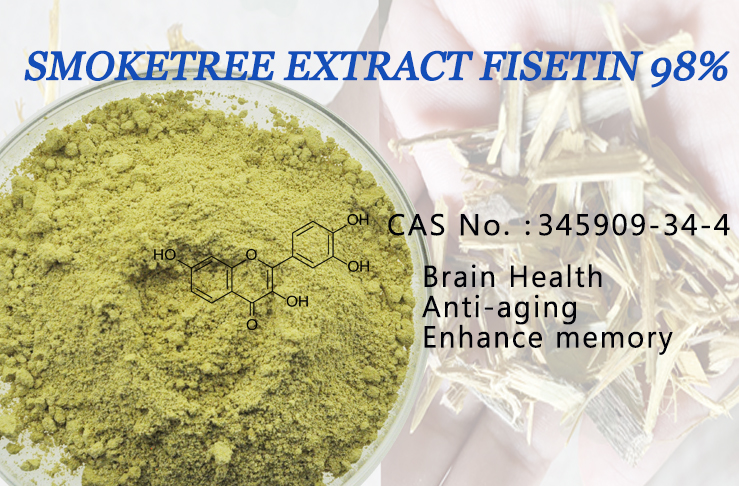
Fisetin is a naturally occurring flavonol, specifically a flavonoid polyphenol found in many fruits and vegetables including strawberries, apples, persimmons, onions, and cucumbers. Supplements with concentrated fisetin are commercially available. Although preclinical studies suggest that fisetin might increase cognitive performance and protect against Alzheimer's disease.
Focus, alertness and optimal cognitive function can enhance every aspect of human life. For ongoing cognitive performance, the brain, like all other organs, requires nutritional support. As we age, our cells degrade due to oxidative stress making good cognitive nutrition vital.
Fisetin is supported by scientific research conducted at the prestigious, renowned Salk Institute for Biological Studies. This scientific research has shown that fisetin protects neurological function, supports cellular integrity and promotes neuronal cell growth."This is a more rigorous study than our previous studies to test how effective this compound is as a treatment," said Pamela Maher, a senior researcher in the laboratory of Salk Professor David Schubert. "Based on the success of this study, we have now Start clinical trials."
Over the past few decades, Maher has studied how a polyphenol flavonol called fisetin, found in fruits and vegetables, improves memory and even prevents memory loss in mice. Alzheimer's disease. Recently, the research team synthesized different variants of fisetin and found that one variant called CMS121 was particularly effective at improving memory in animals and slowing the degeneration of brain cells.
Naturale Biopharma , the founder of healthy life,we aways adhere to nature, pursue excellent quality and healthy life, we are committed to providing high-quality fisetin formulation, an anti-aging substance that has received much attention and praise, allowing you to resist aging while inhibiting SASP and preventing senescent cells from harming the body of damage.
 A Multifunctional Nutrient
Lab researcher holding tomato used to derive fisetin
The flavonoids are a group of plant compounds with health-promoting properties.
Fisetin is a flavonoid with dozens of biological mechanisms that support neurological health.
Fisetin is found in many fruits and vegetables, but only in very small amounts. Most commercially available oral fisetin has poor bioavailability.
Scientists have overcome this problem by coating the fisetin in a form of fiber found in the fenugreek plant.
This helps protect the fisetin from getting broken down, leading to about 25 times more fisetin being absorbed into the body.
Alzheimer’s disease,
Brain aging and cognitive decline,
Stroke,
Neurological complications of diabetes,
Depression,
Traumatic brain injury,
Parkinson’s disease,
Huntington’s disease,
Amyotrophic lateral sclerosis (ALS),
Neurotoxicity (damage to the nervous system caused by toxins),
Schizophrenia,
Vascular dementia, and
Other forms of neurodegenerative disease.Additionally, in a clinical trial, fisetin improved response to treatment in ischemic stroke.
Fighting Against Neurological Disease
A review published in 2021 found that fisetin modulates 37 different biological pathways.
All these actions could reduce the risk and severity of age-related neurological conditions.
Five ways that fisetin protects the brain and nervous system are:
1. Preventing Toxic Brain Deposits
The plaques and tangles deposited in the brain are made of toxic proteins called beta-amyloid and hyperphosphorylated tau. In preclinical models, fisetin prevents their accumulation.6,7
In another study, fisetin increased autophagy, a form of cellular cleaning, which helps clear existing toxic proteins from brain cells.8
2. Antioxidant Activity
Oxidative stress is a significant contributor to neurological disorders.
Fisetin is a potent antioxidant that can scavenge harmful compounds before they do damage.1
It has been shown in preclinical models that fisetin increases intracellular levels of glutathione, a free-radical scavenger important for cell survival.9
3. Reduced Chronic Inflammation
Chronic inflammation contributes to most chronic disease in the brain.
In preclinical trials, two forms of fisetin blocked activation of nuclear factor-kappa B (NF-kB), a master regulator of inflammation.10,11 This action prevents the release of pro-inflammatory compounds.
In a study in a particular strain of mice susceptible to Alzheimer’s-type neurological degeneration, feeding them fisetin in early to mid-life prevented learning and memory decline.
Fisetin also limited levels of inflammatory compounds that are elevated in Alzheimer’s disease and other neurodegenerative disorders.12
4. Memory and Learning Support
A protein called CREB helps brain cells adapt to experiences over time, a process known as long-term potentiation.13 This is a critical component of memory formation.
Fisetin increases activation of CREB and enhances long-term potentiation in preclinical studies.13-15
5. Blocking Glycation Damage
Glycation occurs when glucose attaches to proteins, DNA, and lipids, forming toxic compounds.
